 Oxide Dice
FiveM street craps / Oxide Studios
Oxide
Dice
Shoot dice for their cash.
Street craps, player against player. Put the dice down on the pavement or pull up to a table, set a bet, and the other players fade it. The dice decide who takes the pot.
- No house: every dollar comes from another player
- The server holds every stake and rolls every result
- Everyone nearby sees the same dice land
The pickup, the throw, the reaction and both tables. Recorded in game.
2–8
Players on the street
3
Places to play
45 m
Same throw for all within
30 to 1
Top number-bet odds
The film
See it in motion.
The launch film: street craps on the crates and at both tables, recorded in game.
01How a round goes
Craps in
five steps.
Never shot dice? This is one round in the game's own interface. It plays the same on the street and at both tables, and nobody plays the house.
Step 1 of 5
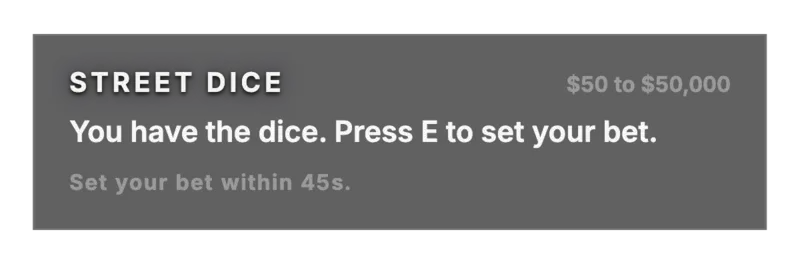
The shooter sets a bet
Whoever holds the dice presses E and types an amount: $50 to $50,000 on the street by default, and each table has its own limits. Until somebody fades it, the shooter can change it.
The bet leaves the shooter's cash the moment the game accepts it.


In game
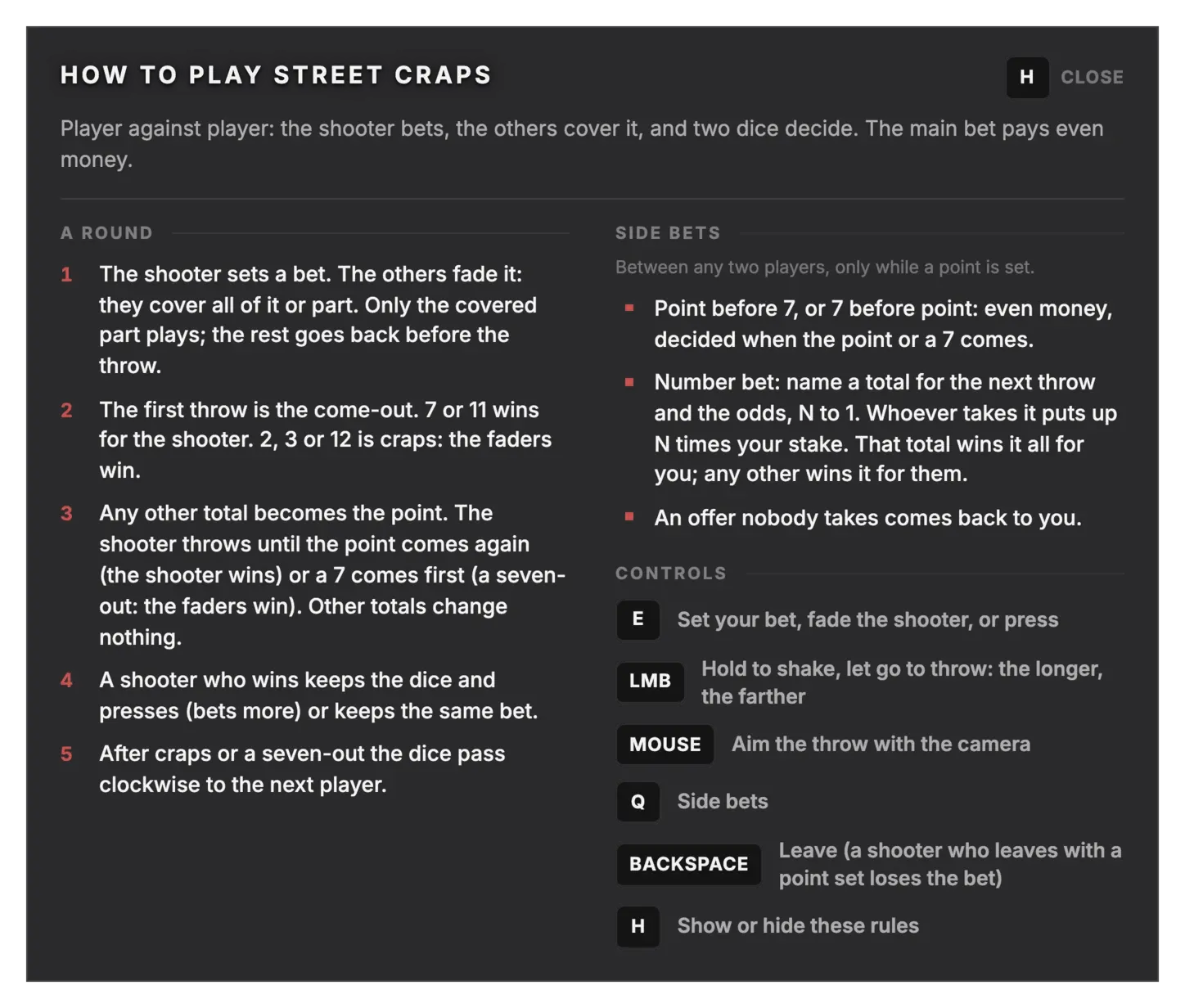
H opens the rules.
Pressing H in a game opens a rules panel written for someone who has never shot dice: how a round goes, the side bets and every key. Players can rebind it, and a player's first 3 games add a tip to the controls card.
02The throw
Hold, shake,
let go.
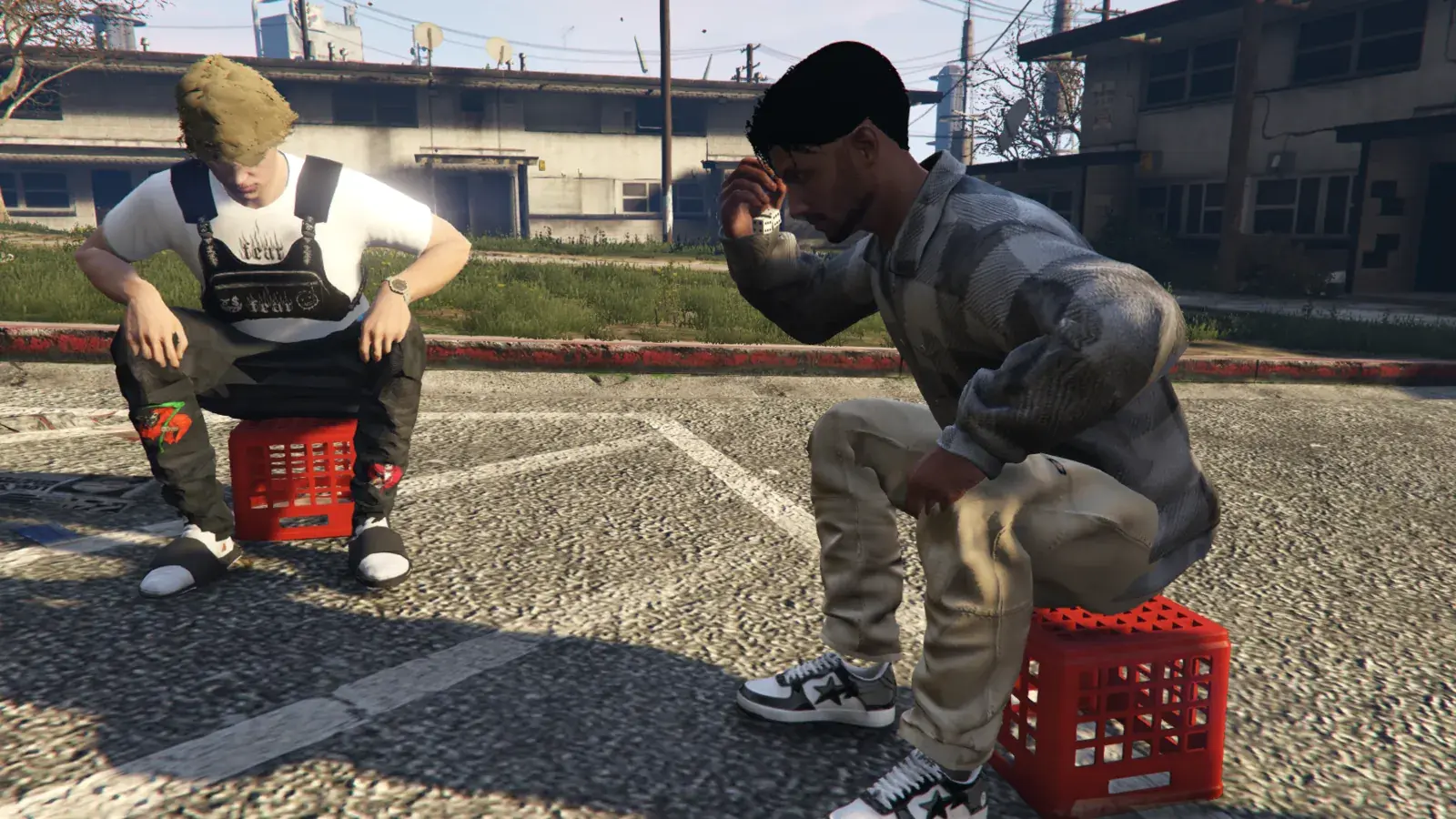
Aim with the camera, hold the left mouse button to shake and let go to throw. The longer you hold, the further the dice fly before they first land.
On the pavement
The dice come down inside the game, bounce once or twice and roll a little, short of everyone's feet. They stay where they land until the shooter picks them up for the next throw.
Street game / one take, from the throw to 6 and 5
Filmed from set camera angles. The throw camera players get is in 07.
The server decides
Every result comes from the server's cryptographically strong random number generator. How hard or where you throw changes how the dice tumble, never what they show.
The same dice for everyone
Every player within 45 metres sees the same throw: the same dice bounce the same way and land on the same faces.
Always on the surface
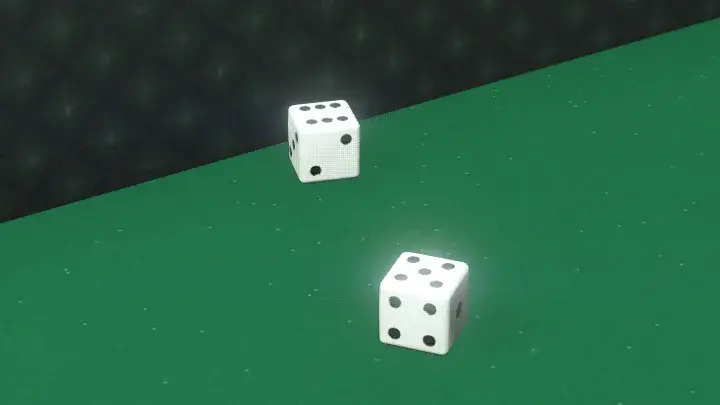
The dice always land on the play surface, so there is no "no roll". They arc, bounce, roll and settle in about a second and a half.
Charged and aimed
Hold up to 0.9 seconds for the hardest throw. It goes toward the middle of the game, turned up to 25 degrees toward where you look, and the server clamps it.
03The money
The server
holds it.
Bets use the cash a character carries, never the bank. Every stake leaves it the moment the game accepts it and waits on the server until a roll decides it.
No house
No house, no rake and no bank. Every dollar a player wins was staked by another player in the same game.
Held the moment it's accepted
A bet, a fade, a side bet offer and taking a side bet all leave the player's cash at once. The server holds it until a roll decides it.
Restart-safe
Every stake in a running game is saved to the database as it changes. After a restart each one goes back: at once to players online, otherwise at their next login.
Always paid
Winnings go into cash. If the framework won't take more cash they go to the bank, and if neither will, they're paid at the player's next login.
Quiet games end
If nothing is covered for 60 seconds the game ends and every bet comes back. A shooter who doesn't act for 60 seconds is out.
On the record
Every stake, roll and payout is logged on the server through o-link's logger, so a dispute can be checked.
A worked example
Ana bets $500. Ben fades $200 and Cal fades $100, so $300 is covered. When Ana throws, the $200 nobody covered goes back into her cash.
| Result | Ana | Ben | Cal |
|---|---|---|---|
| Natural (7 or 11), or hitting the point | Wins $300: gets $600 back | Loses his $200 | Loses his $100 |
| Craps (2, 3 or 12), or a seven-out | Loses her $300 | Wins $200: gets $400 back | Wins $100: gets $200 back |
Natural (7 or 11), or hitting the point
- Ana
- Wins $300: gets $600 back
- Ben
- Loses his $200
- Cal
- Loses his $100
Craps (2, 3 or 12), or a seven-out
- Ana
- Loses her $300
- Ben
- Wins $200: gets $400 back
- Cal
- Wins $100: gets $200 back
Leaving settles by the rules
| Who leaves | When | What happens |
|---|---|---|
| The shooter | Before the come-out throw | The game ends and every bet goes back to whoever put it up. |
| The shooter | While the dice are in the air | The roll settles as normal, then the game ends; a roll that sets the point counts as a seven-out. |
| The shooter | With a point set | It counts as a seven-out: the faders win, and the game ends. |
| A fader | Before the come-out throw | Their cover comes back and their spot frees up. |
| A fader | After the throw | Their cover stays in play, and they're paid if the faders win. |
| Anyone | With side bets | Offers nobody took come back at once; taken side bets are paid by the rules. |
The shooter
Before the come-out throw
- What happens
- The game ends and every bet goes back to whoever put it up.
The shooter
While the dice are in the air
- What happens
- The roll settles as normal, then the game ends; a roll that sets the point counts as a seven-out.
The shooter
With a point set
- What happens
- It counts as a seven-out: the faders win, and the game ends.
A fader
Before the come-out throw
- What happens
- Their cover comes back and their spot frees up.
A fader
After the throw
- What happens
- Their cover stays in play, and they're paid if the faders win.
Anyone
With side bets
- What happens
- Offers nobody took come back at once; taken side bets are paid by the rules.
04Side bets
Bet on the
next roll.
While a point is set, anyone in the game can make or take side bets with the others, the shooter included. Q opens the side bets card.
An offer to take
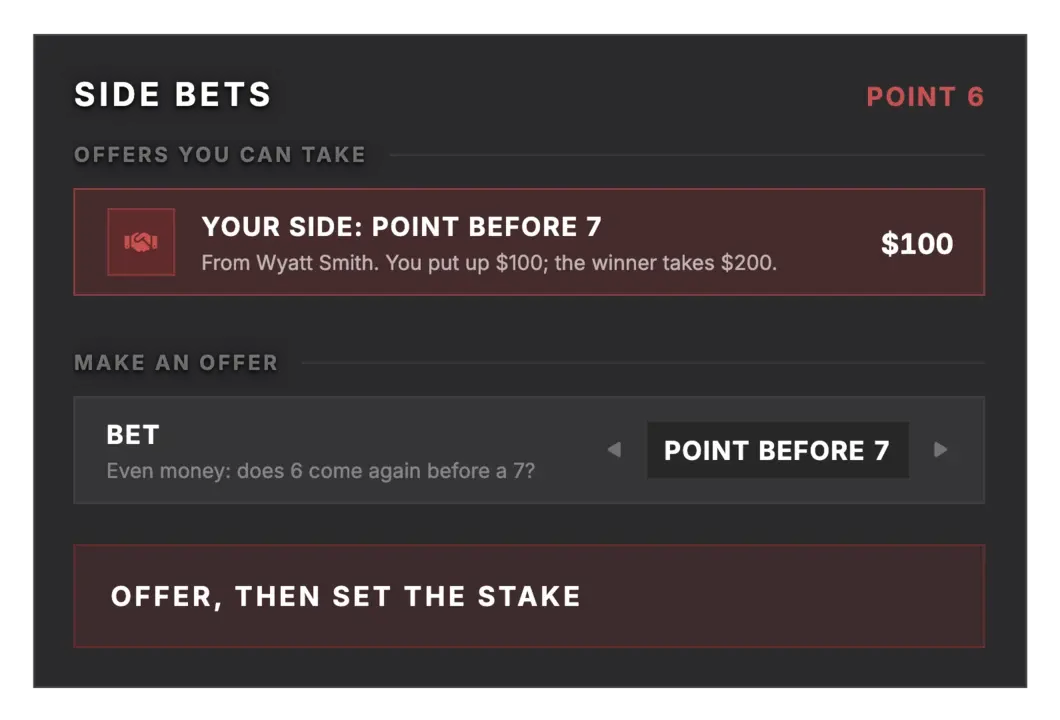
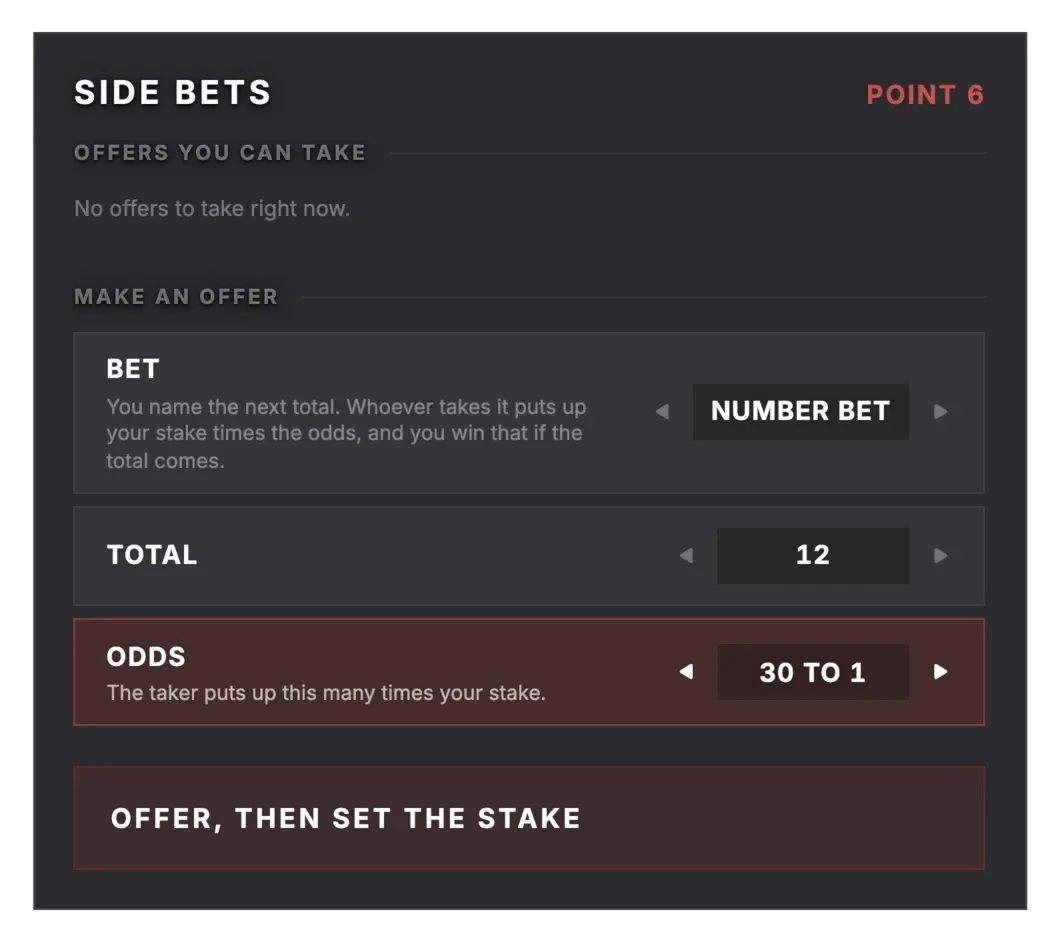
Make an offer
| Kind | How it works | Decided |
|---|---|---|
| Point before 7 / 7 before point | Even money. Pick a side and a stake; whoever takes it puts up the same amount on the other side. | As soon as the point or a 7 is rolled. The winner takes both stakes. |
| Number bet | Name a total from 2 to 12 and odds from 1 to 1 up to 30 to 1. The taker puts up your stake times the odds. | On the very next roll. Your number and you take both stakes; anything else and the taker does. |
Point before 7 / 7 before point
- How it works
- Even money. Pick a side and a stake; whoever takes it puts up the same amount on the other side.
- Decided
- As soon as the point or a 7 is rolled. The winner takes both stakes.
Number bet
- How it works
- Name a total from 2 to 12 and odds from 1 to 1 up to 30 to 1. The taker puts up your stake times the odds.
- Decided
- On the very next roll. Your number and you take both stakes; anything else and the taker does.
Ana offers "12 next at 30 to 1" with a $100 stake. Ben takes it and puts up $3,000. If the next roll is 12, Ana takes the $3,100; anything else and Ben does.
Make, take or take back
Offers wait on the side bets card for a taker. Take one with ENTER, or take your own back while nobody has taken it.
Four at a time
Each player can hold up to 4 side bets, offered or taken. Stakes stay within the game's bet limits, and so does the taker's side.
Nothing left hanging
A number bet nobody took comes back after the next roll, a point-or-7 offer when the point or a 7 comes, and every untaken offer when you leave.
05On the street
Crates on the
pavement.
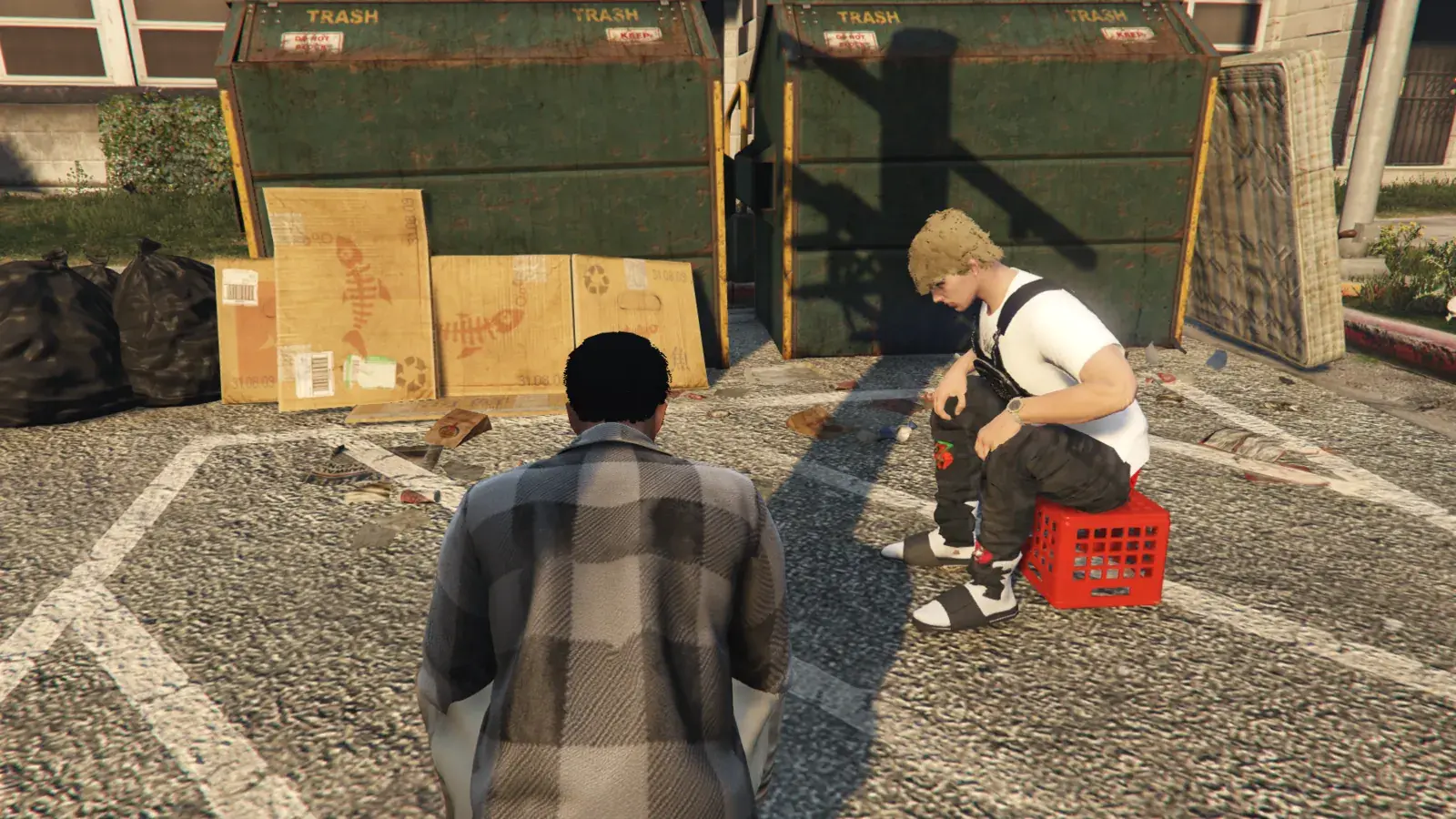
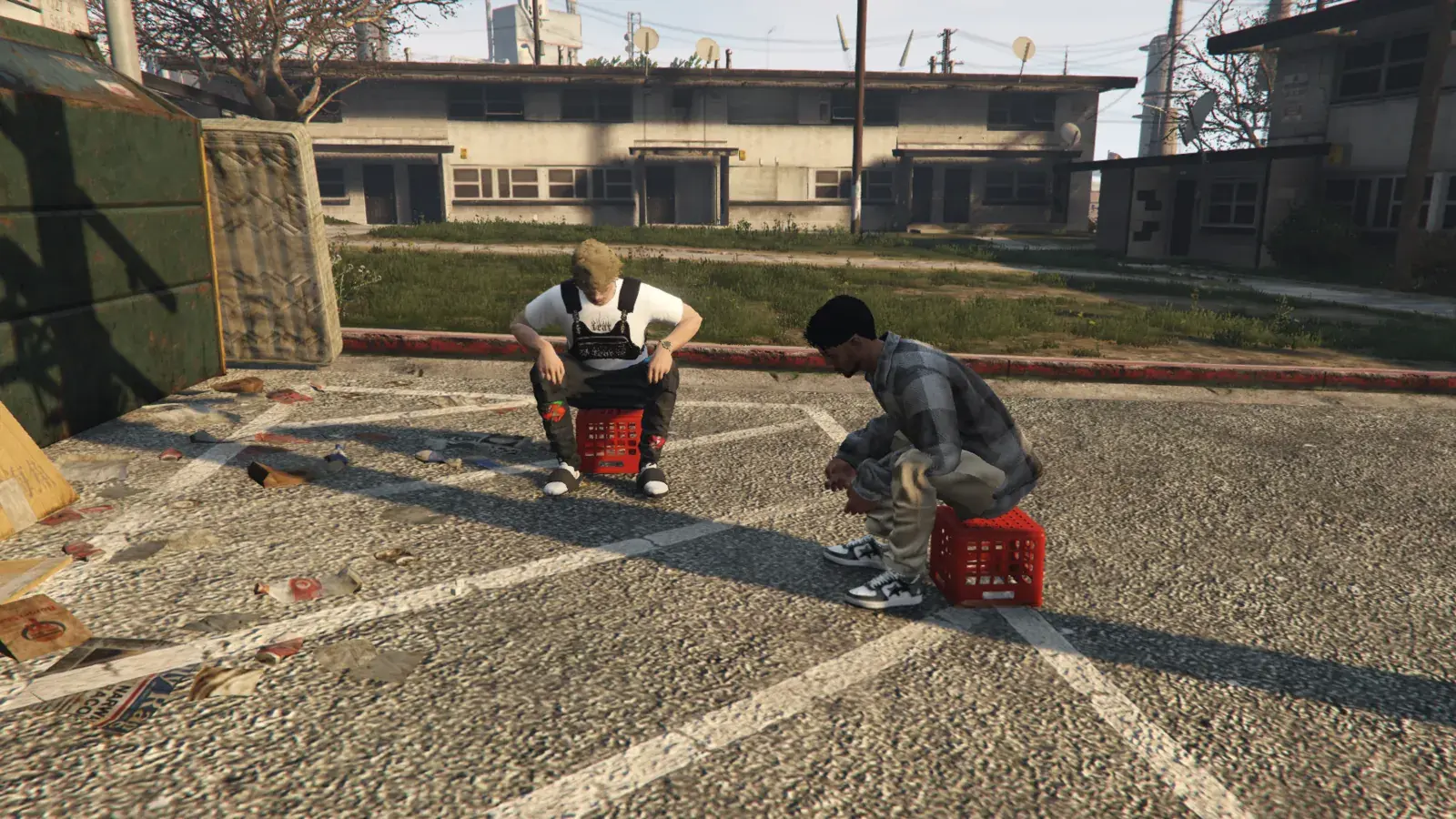
Use the Street Dice item and the game goes down at your feet. You sit on an upturned milk crate and you're the first shooter; anyone nearby can pull up a crate.
Wyatt walks over and joins: his crate appears as he sits.
2 to 8 players
Each player sits on an upturned plastic milk crate, spaced evenly round the dice. A crate appears as a player sits and goes when they leave.
Walk up and join
Aim at the middle, under the game's tag, and pick Join the dice game from within 2.5 metres. You take the free spot nearest you.
One pair lasts
The Street Dice item puts the game down at your feet and makes you the first shooter. The dice are never used up.
Needs room
A street game won't start in a vehicle, in water, on ground steeper than 15 degrees or within 6 metres of another game or table.
A street game / over the shooter's shoulder
06Dice tables
Two tables,
placed in game.
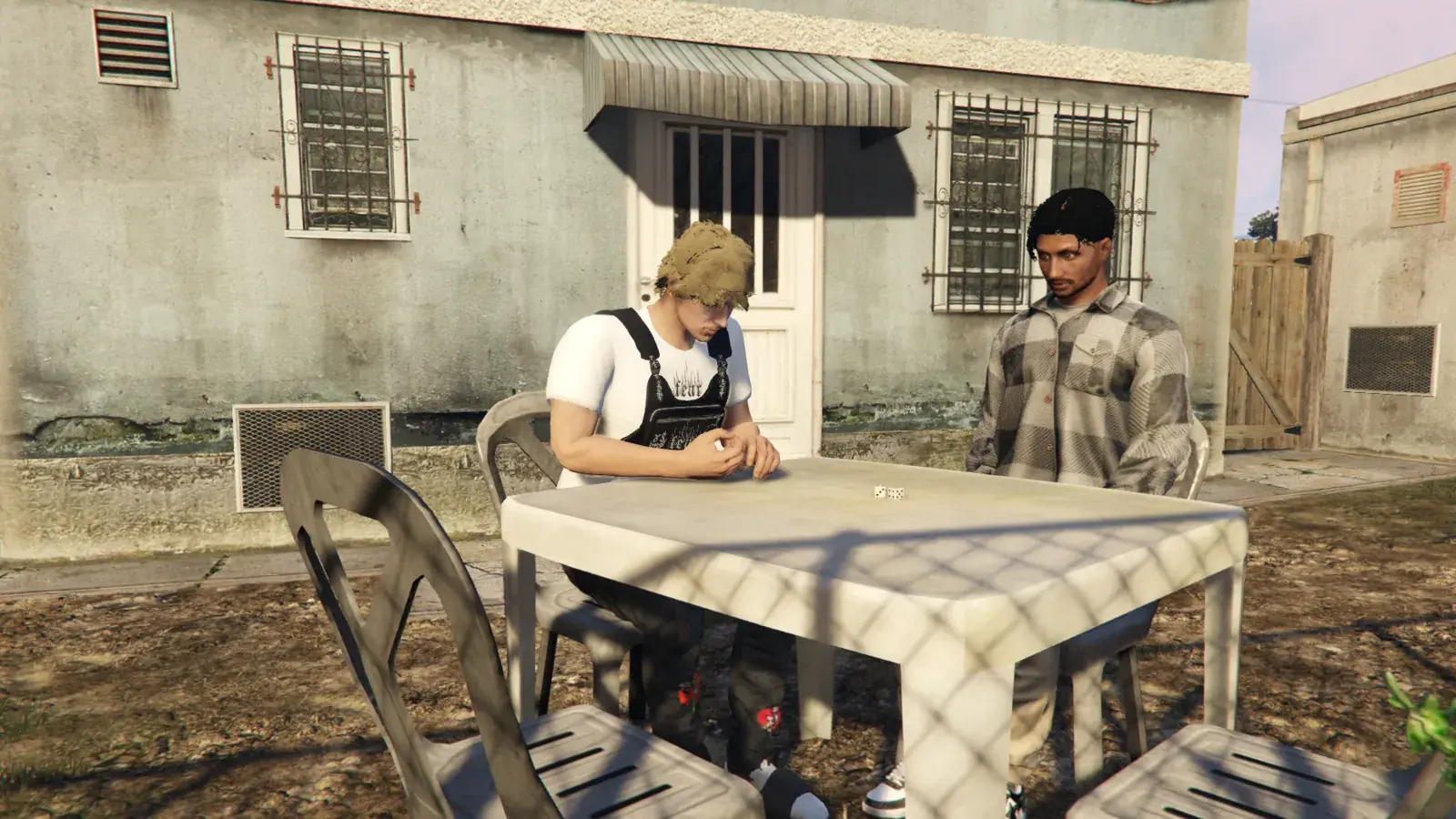
A long casino table with a back wall, or a folding card table with four chairs. Both play exactly like a street game, and both are legal: tables never raise a police alert.
Along the rail: the felt, the ledge and the back wall.
A player walks in and takes the chair across.
| Detail | Casino table | Folding table |
|---|---|---|
| Item | Dice Table (dice_table) | Folding Dice Table (dice_folding_table) |
| What it is | A long table with green felt, a felt-lined ledge where the pot stands and a rubber-lined back wall | A small white card table with four chairs, one on each side |
| Players | 8 at the rail, leaning on it; 5 of them take the dice | 4, one on each chair; all of them take the dice |
| The throw | Down the table; hard throws carry into the back wall | A soft toss onto the top |
Casino table
- Item
- Dice Table (dice_table)
- What it is
- A long table with green felt, a felt-lined ledge where the pot stands and a rubber-lined back wall
- Players
- 8 at the rail, leaning on it; 5 of them take the dice
- The throw
- Down the table; hard throws carry into the back wall
Folding table
- Item
- Folding Dice Table (dice_folding_table)
- What it is
- A small white card table with four chairs, one on each side
- Players
- 4, one on each chair; all of them take the dice
- The throw
- A soft toss onto the top
Placing a table
Place it in the world
Your character stays where it is, in view. Aim at the ground and a see-through copy of the table, chairs and all, follows: green within your reach, red past it. The mouse wheel turns it, a left click places it, and ENTER fine-tunes it with axis handles and the arrow keys.
Who may place
Admins only by default. Or let players place inside allowed zones, or anywhere outside blocked zones, drawn in the world from /dice settings.
Sensible spots
On the ground, not on a vehicle, a prop or another table. Off roads and out of water, within 10 metres of where the player stands, 3 metres from any other table or game, and 2 tables per character, by default.
Packed up, kept
Placed tables stay through restarts. The owner or an admin packs one up and gets its item back, if it fits in their inventory; fixed tables you set always stand.
07The throw camera
Follow the
dice.
Players in the game get a throw camera. It comes up over the shooter's shoulder as they throw, follows the dice as they roll, looks closely down at the faces once they've settled, then hands back the normal view.
The shooter's screen on a street throw, cropped clear of the interface.
One shot for the whole game
On the street every player in the game gets the same shot. If the shooter's head or back would hide the dice, it steps to one side, and it only rises when nothing beside the shooter is clear.
Dice you can read
It narrows its view as the dice roll away, so they stay easy to see, then holds on the settled faces.
At the tables
At a dice table it rises over the shooter's shoulder when someone is in the way.
Your call
Watchers outside the game keep their own view, and the camera can be switched off in /dice settings.
08Made for it
Models, moves
and sound.
The die, the crate and the casino table are the resource's own models, and every street, chair and table clip is its own animation, wins and losses included.
Its own models
A 24 mm die with rounded edges, the upturned milk crate and the casino table, streamed by the resource. The folding table and its chairs are base-game props.
Its own animations
Sitting on a crate or a chair, the shooter picks up, shakes and throws while the others wait at their own pace and react when a roll wins or loses them money. At the casino table everyone leans on the rail.
High heels too
Characters in high heels get matching versions of every street, chair and table clip.
Heard nearby
The rattle, the throw and the landing on the pavement or the felt, or off a wall, for everyone within 15 metres, quieter further away.
The pot on show
A cash pile that grows with the pot: a single note from $1, then bigger piles from $500, $2,500, $10,000 and $40,000.
Taught as you play
A controls card says what's happening, what to press and what you have at stake, with tips for a player's first 3 games. H opens the rules.
The shake
The die / casino table
The folding table
09For server owners
Set it
in game.
Almost every setting lives in the database and is edited in game by admins, checked again on the server and applied without a restart.
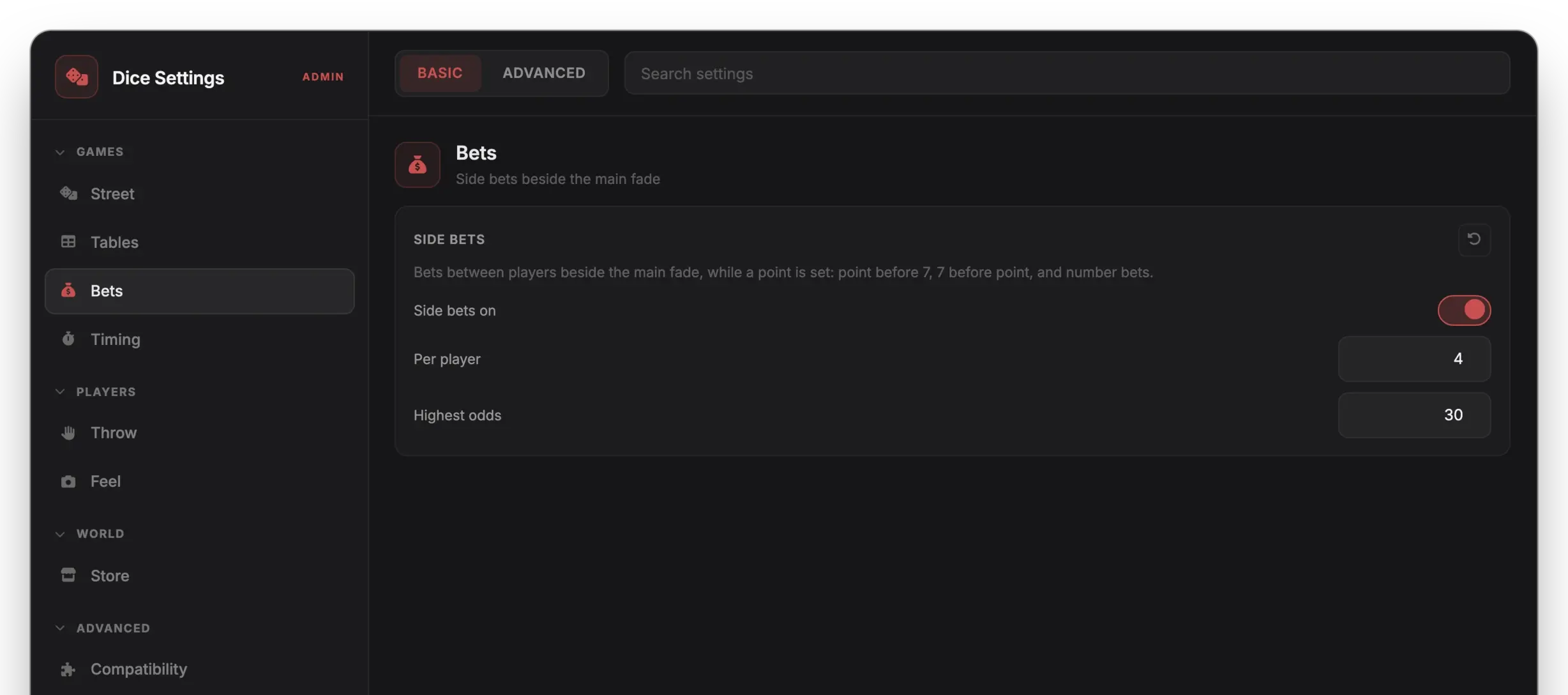
Live settings
/dice settings edits almost every setting in game: Games, Players, World and Advanced, with Basic and Advanced tabs and a search. Saved to the database and applied without a restart.
Drawn in the world
Table zones are drawn where they go, and fixed tables and sellers are set with Place in world.
A dice seller
An NPC with a map blip sells dice and both tables for cash. Move it, add sellers, change prices, add your own rows or switch it off.
Police alerts, if you want them
Off by default. Set a chance and a new street game can raise a 10-31 Illegal Gambling call, with a 5-minute cooldown within 50 metres. Tables never alert.
One command
/dice help and /dice leave for players; /dice settings, give, table place, end, games and demo for admins.
Model safety
A model a player's game can't load is skipped and named to admins instead of hanging, and Config.ModelSwaps can replace it.
Works better with
- Oxide HUDFree. The controls card and the rules panel become HUD panels players move or switch off in /hud, and the dice cards and prompts take your server's accent colour. Needs o-link 1.12.1 or newer.
- oxide-loggerFree. A record of every stake, roll, payout and admin action in the console, a file or Discord. Without it, the same lines go to your console.
Both optional. Police alerts also go into any dispatch resource o-link supports
For developers
Change it from any script.
Server exports GetSetting and SetSetting read and write the same settings the editor does, and a change is saved to the database.
Exports & API ↗-- Switch street games off during an eventlocal function setStreetDice(enabled)local street = exports['oxide-dice']:GetSetting('Street')street.enabled = enabledreturn exports['oxide-dice']:SetSetting('Street', street)end setStreetDice(false) -- running games finish-- ...latersetStreetDice(true)From the exports reference: street games off for an event, back on after.
10Before you install
What it needs.
- 01
Buy it here
Tebex asks you to log in with your Cfx.re account at checkout.
- 02
Download it
Oxide Dice appears in your assets on the Cfx.re Portal.
Open your Portal assets ↗ - 03
Start it
Place oxide-dice in your resources and start it after your framework and o-link. Its database tables create themselves.
- 04
Add the items
Add dice, dice_table and dice_folding_table to your inventory (an ox_inventory file ships ready to paste), copy their three images and restart.
Requirements
- ox_lib
- oxmysql
- o-link 1.11.0 or newer
- A target resource that o-link supports
- ESX: ox_inventory
Optional
- Oxide HUD (free), with o-link 1.12.1 or newer
- A dispatch resource that o-link supports, for police alerts
- oxide-logger (free)
Frameworks
- QBCore
- Qbox
- ESX
- Bets use the framework's cash in hand
Database
dice_tables, dice_escrow, dice_owed and the shared oxide_settings, created when the resource starts. Nothing to import; the database user needs permission to create tables.
Code delivery
Escrow protected through Cfx.re asset escrow. shared/config.lua, shared/config/*.lua, locales/*.json, sql/*.sql and items/*.lua are open.
Streamed
The die, the casino table, the crate and the dice animations ship in stream/ and load on their own.
Frontend
Vue 3, Vite and Tailwind CSS for the controls card, the rules panel, the tag, the pop-ups, the side bets card, the seller's store and the settings editor. It ships pre-built.
Which frameworks does it run on?
QBCore, Qbox and ESX, through o-link 1.11.0 or newer. ESX needs ox_inventory; QBCore and Qbox run on their default inventories.
Does the server or the resource take a cut?
No. There is no house, no rake and no bank: every dollar a player wins was staked by another player in the same game.
Can a player fix a roll?
No. The server's rules engine decides every bet, fade and throw, and rolls every result with a cryptographically strong random number generator. A client never reports a result.
What happens to bets if the server restarts?
Every stake in a running game is saved as it changes and given back when the resource starts again: at once to players online, otherwise at their next login.
Do my players need to know craps?
No. The controls card says what's happening and what to press, a player's first 3 games add tips, and H opens a rules panel written for someone who has never shot dice.
Can players place their own tables?
Only admins can by default. Set Who may place to allowed zones or to anywhere outside blocked zones in /dice settings, and draw the zones in the world.
Will the police come?
Only if you want them to. Police alerts from street games are off by default, and dice tables never alert.
Roll them.
Street craps for QBCore, Qbox and ESX: on the pavement or at a table, player against player, with the server holding every stake.

Oxide Dice
Street craps, player against player
Player against player. No house.
Oxide Studios